

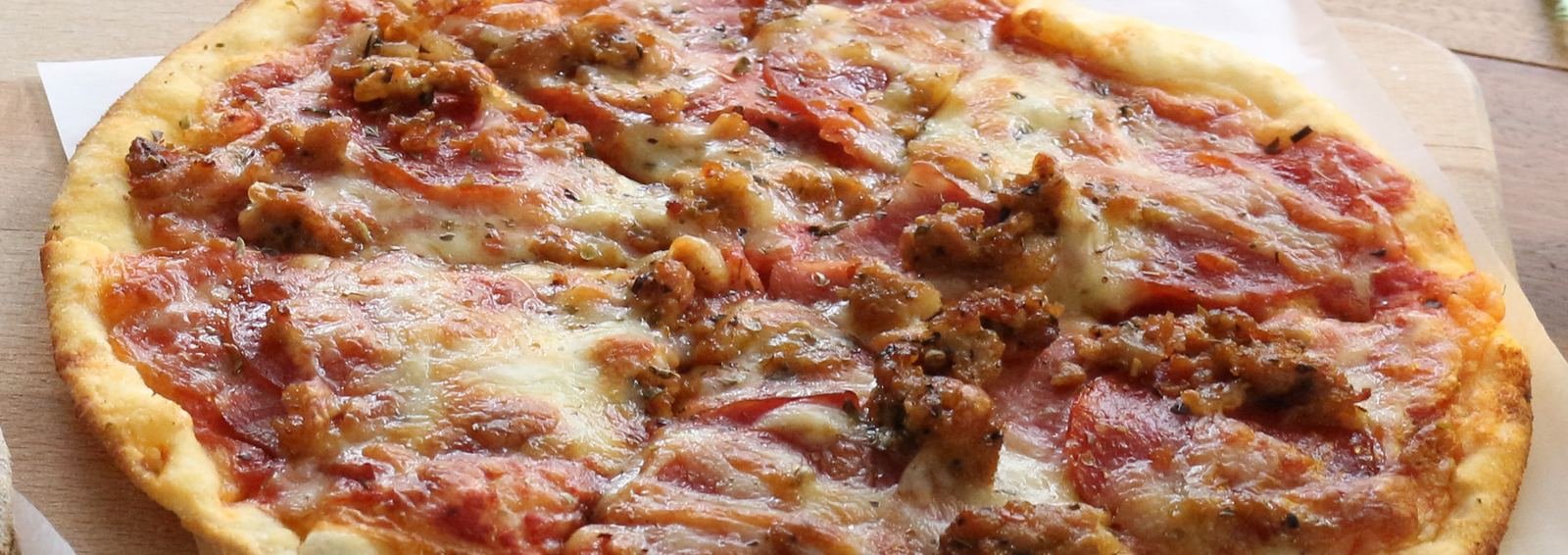
The crust is the foundation of every pizza, and it decides how the whole pie eats. Here is a plain-English tour of the main crust styles you will find in American pizzerias, including the thin tavern-style crust that dominates Minnesota.
At a glance
| Crust | Thickness | Texture | Cut |
|---|---|---|---|
| Neapolitan | Thin center, puffy rim | Soft, charred, chewy | Wedges |
| New York | Thin | Crisp base, foldable | Large wedges |
| Tavern-style | Very thin | Cracker-crisp | Squares (party cut) |
| Hand-tossed | Medium | Soft and bready | Wedges |
| Pan / Detroit | Thick | Airy inside, crisp fried edges | Squares |
| Chicago deep dish | Very thick | Buttery, biscuit-like | Wedges |
| Sicilian | Thick | Spongy, focaccia-like | Squares |
Neapolitan
The original pizza from Naples uses finely milled “00” flour, water, salt and yeast. It bakes for about 60 to 90 seconds in a very hot wood-fired oven, which puffs the rim and leaves leopard-spot charring. Keep toppings minimal: tomato, fresh mozzarella, basil and olive oil.
New York style
A larger, thinner descendant of Neapolitan pizza, baked longer at lower heat in deck ovens. The slice should fold in half lengthwise without cracking. It is ideal for pepperoni, sausage and classic cheese.
Tavern-style (Midwest thin crust)
A cracker-thin, crisp crust cut into squares instead of wedges. It is everywhere in Chicago and the Twin Cities. It is built for sharing: edge pieces for crunch lovers, center squares for topping lovers. Read more in our tavern-style pizza guide.
Hand-tossed
The all-rounder most delivery pizzerias default to: medium thickness, a soft interior and a noticeable crust edge. It handles three or four toppings comfortably, which makes it a good base for a Hawaiian or a loaded build-your-own pie.
Pan and Detroit style
Dough proofed in an oiled pan fries on the bottom as it bakes. Detroit style, which began in the 1940s, uses rectangular steel pans. Cheese is spread to the edges so it caramelizes into a crisp frame, and sauce is often ladled on top after baking.
Chicago deep dish
Deep dish is built in a tall, round pan with a buttery crust. Cheese goes on the bottom, then toppings, then chunky tomato sauce on top. It needs a long bake and is eaten with a knife and fork.
Sicilian
A thick, rectangular, focaccia-like crust baked in a sheet pan. It is spongy inside and crisp on the bottom, a good base for simple tomato and cheese.
Gluten-free and cauliflower crusts
Many pizzerias now offer gluten-free crusts made from rice flour or starch blends, as well as cauliflower crusts. They bake crisper and thinner, so keep toppings light. People with celiac disease should ask about cross-contact, since most pizza kitchens are full of flour.
Choosing the right crust
- Sharing with a group: tavern-style squares.
- Heavy toppings: pan, Detroit or deep dish.
- Tasting the ingredients: Neapolitan or New York.
- Balanced delivery pizza: hand-tossed.
Next step: pick toppings that suit your crust with our topping combinations guide.
Frequently asked questions
What is the difference between thin crust and New York style?
New York crust is thin but flexible and foldable. Midwest thin (tavern-style) crust is cracker-crisp and cut into squares.
Which pizza crust is healthiest?
Thin crusts have the fewest calories per slice because there is less dough. Toppings and cheese matter more than the crust type.
Why is my homemade crust not crispy?
Most often the oven is not hot enough or the pizza has too much sauce. Preheat a stone or steel for 45 minutes at the highest setting.
This guide is published by the team preserving the Umbria Gourmet Pizzeria website. Umbria Gourmet Pizzeria at 521 W 98th St, Bloomington, MN has permanently closed; this page offers general food information and is not an offer to order.
